
A Buyer’s Guide to Solar Panels for Homes in Pakistan
Discover how to select the right solar panels for your Pakistani home, compare prices, understand installation costs, and choose between on‑grid, off‑grid, or hybrid systems.
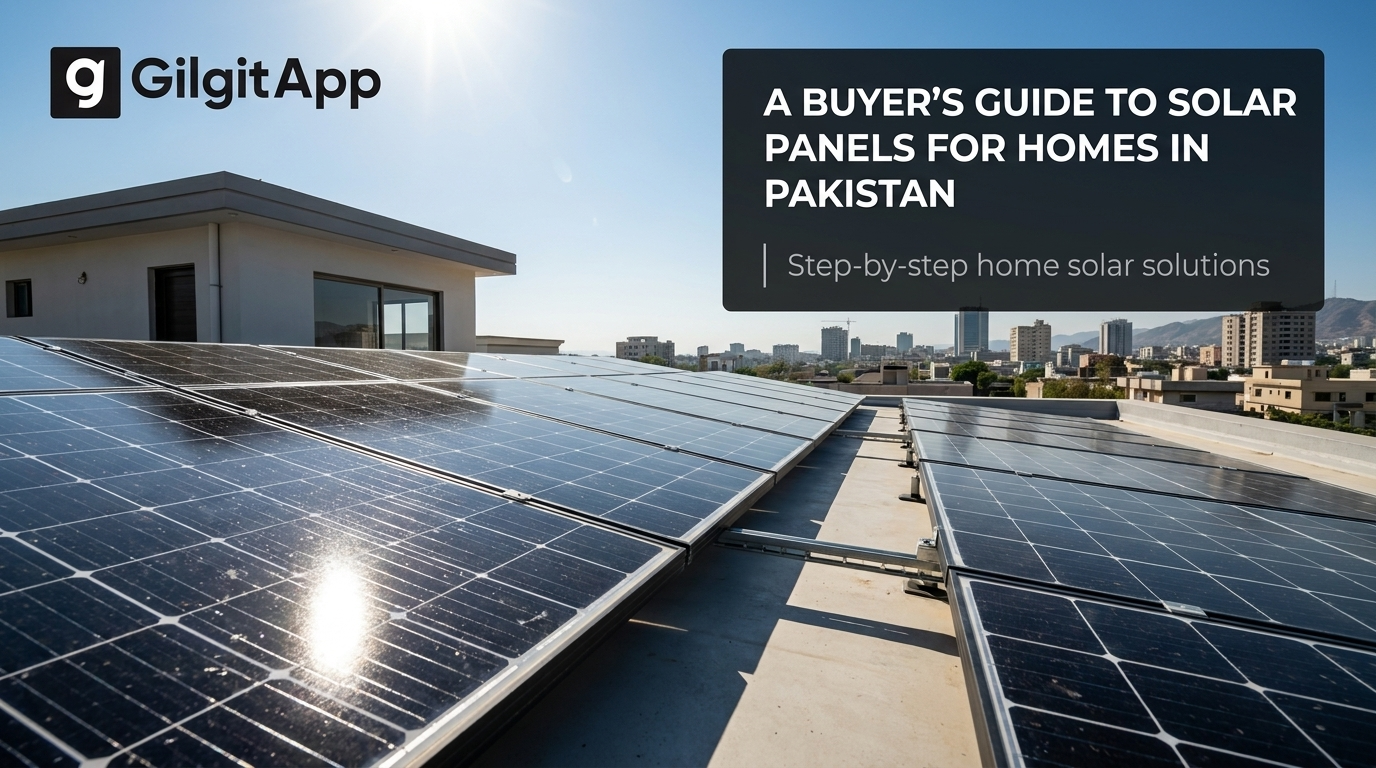
Solar energy for homes is no longer a futuristic concept in Pakistan; it is a practical solution to rising electricity bills and frequent load‑shedding. This guide walks you through everything you need to know about selecting, pricing, and installing residential solar panels in Pakistan, so you can make an informed decision and enjoy reliable, clean power.
Understanding the Types of Solar Panels
When you search for solar panels for homes Pakistan, you will encounter three main technologies:
- Monocrystalline panels – known for high efficiency (18‑22%) and sleek black appearance. Ideal for limited roof space.
- Polycrystalline panels – slightly lower efficiency (15‑18%) but more affordable, with a blue‑tinted look.
- Thin‑film panels – lightweight and flexible, best for large, unobstructed areas but generally lower efficiency.
Choosing the best solar panels in Pakistan depends on your roof size, budget, and aesthetic preference.
Price Landscape of Solar Panels in Pakistan
The solar panels price in Pakistan varies widely based on type, brand, and capacity. As of October 2026, typical price ranges are:
- Monocrystalline 350W panel: PKR 28,000‑35,000 per panel.
- Polycrystalline 330W panel: PKR 22,000‑28,000 per panel.
- Thin‑film 300W panel: PKR 18,000‑24,000 per panel.
For a complete home solar system in Pakistan, you also need a solar inverter, mounting structure, wiring, and balance‑of‑system components. A 5kW solar system price in Pakistan typically falls between PKR 650,000‑800,000, while a 10kW solar system price in Pakistan ranges from PKR 1,200,000‑1,600,000.
System Sizes and How to Match Them to Your Electricity Needs
Start by reviewing your monthly electricity consumption (kWh) from your utility bill. A rough rule of thumb is:
- 1 kW of solar capacity generates about 4‑5 kWh per day in most Pakistani cities.
- To offset a 500 kWh monthly bill, you need roughly a 5‑6 kW system.
- Large homes or small businesses may benefit from a 10 kW or higher system.
Remember that shading, roof orientation, and seasonal variations affect actual output, so it’s wise to add a 10‑15% buffer.
Installation Costs and What Influences Them
The solar panel installation cost in Pakistan includes labor, structural assessment, permits, and the balance‑of‑system parts. Typical ranges are:
- Standard rooftop installation: PKR 80,000‑120,000 for a 5 kW system.
- Complex roofs or reinforced mounting: additional PKR 30,000‑50,000.
- Solar inverter price in Pakistan: PKR 45,000‑85,000 for a 5 kW string inverter, higher for hybrid or three‑phase models.
When you request a quote, ask the installer to break down the solar panel installation cost so you can compare offers transparently.
Net Metering, Export Options, and Government Incentives
Pakistan’s net‑metering policy allows residential users to export excess electricity back to the grid and receive a credit on their utility bill. Key points:
- Only on‑grid solar system installations are eligible for net‑metering.
- The credit rate is usually the same as the retail tariff, making it financially attractive.
- Installation must be performed by a certified installer and approved by the distribution company.
If you prefer energy independence, consider an off‑grid solar system with battery storage, though this adds to the overall cost. A hybrid solar system combines both, allowing you to use the grid when batteries are low while still earning credits for excess generation.
On‑Grid vs Off‑Grid vs Hybrid: Which Is Right for You?
On‑Grid Solar System
Pros: Lower upfront cost, net‑metering credits, no batteries needed. Cons: No power during grid outages unless you have a backup generator.
Off‑Grid Solar System
Pros: Complete energy independence, works during outages. Cons: Higher cost due to batteries, requires careful sizing.
Hybrid Solar System
Pros: Flexibility to store excess energy and still benefit from net‑metering. Cons: Most expensive option; requires sophisticated inverter and battery management.
Comparing Popular Solar Panel Brands in Pakistan
Several international and local brands dominate the market. When evaluating the best solar panels in Pakistan, consider:
- Warranty length (typically 10‑25 years).
- Efficiency rating.
- Local service network.
- Availability of genuine spare parts.
Top‑rated brands include Trina Solar, JA Solar, Canadian Solar, and the locally assembled SunTech and Zorlu panels. Request sample performance data and verify certification (IEC 61215, IEC 61730).
Selecting a Reliable Installer
A trustworthy installer will provide:
- A detailed site assessment report.
- Clear breakdown of solar panel installation cost and timeline.
- Proof of registration with the National Electric Power Regulatory Authority (NEPRA).
- After‑sales support and warranty handling.
Check online reviews, ask for references, and verify that the installer has completed at least three similar residential projects.
Decision Checklist for Homeowners
- Calculate your average monthly consumption (kWh).
- Determine the ideal system size (kW) with a 10‑15% buffer.
- Choose panel type (monocrystalline for limited space, polycrystalline for budget).
- Decide on system type: on‑grid, off‑grid, or hybrid.
- Get at least three quotes that include solar panel installation in Pakistan breakdown.
- Verify installer credentials and warranty terms.
- Confirm net‑metering eligibility with your distribution company.
Conclusion
Switching to solar energy for homes in Pakistan is a financially sound and environmentally responsible choice. By understanding the solar system price in Pakistan, the differences between on‑grid, off‑grid, and hybrid setups, and the importance of a qualified installer, you can confidently select the right solution for your household. Start with a thorough consumption audit, compare reputable brands, and move forward with a clear plan – the sun is ready to power your home today.