
Petrol Falls, Diesel Rises in Pakistan
Petrol prices fall while diesel rises in Pakistan – discover how the new rates impact commuters, delivery services, food costs, and household budgets, with a focus on Gilgit‑Baltistan.
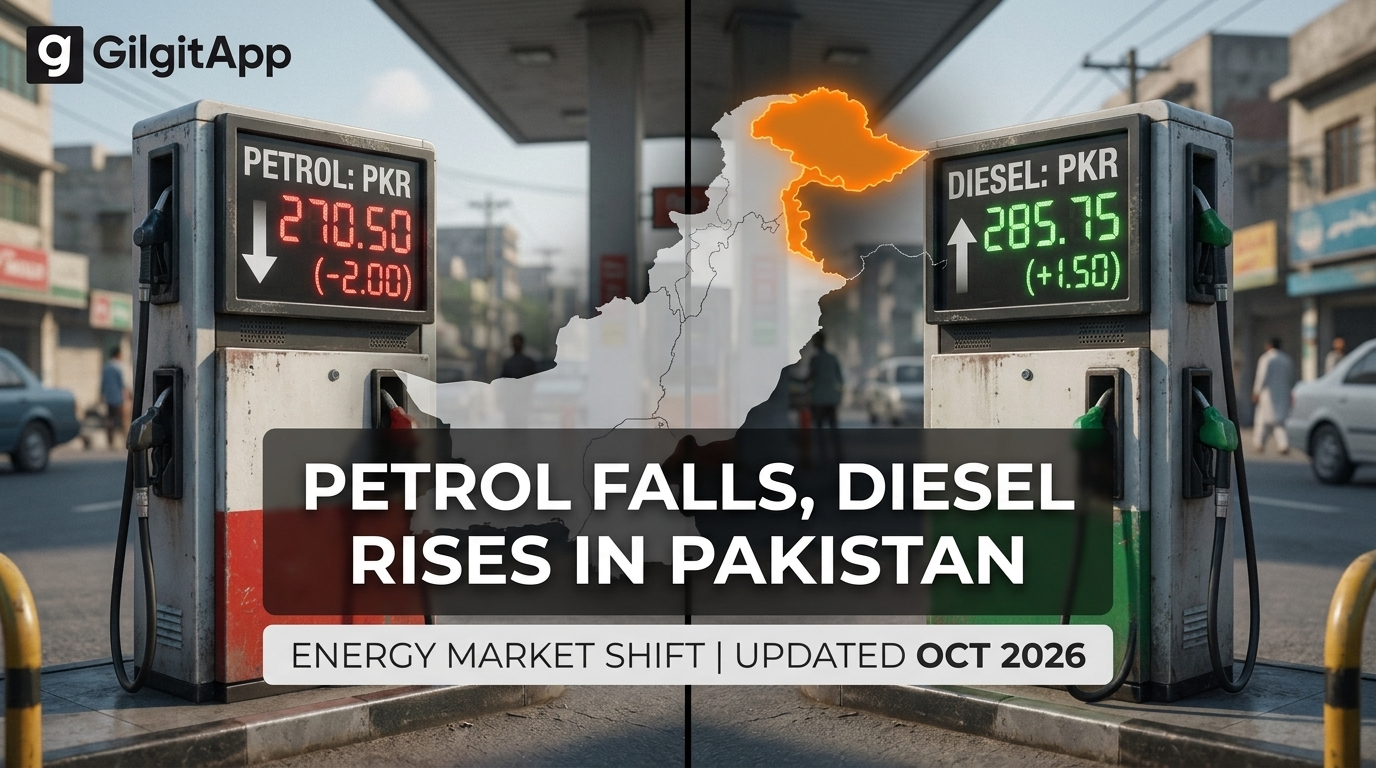
Effective from 25 October 2026, the government announced that the petrol price in Pakistan will be reduced to Rs 285 per litre, down from Rs 300, while the diesel price in Pakistan will rise to Rs 260 per litre, up from Rs 250. This petrol price update and the accompanying diesel price increase are part of the latest Pakistan fuel prices adjustment announced by the Ministry of Energy.
Official Price Announcement
The official rates are:
- Petrol (95 octane): Rs 285 per litre
- Diesel: Rs 260 per litre
These figures represent the latest petrol prices and diesel rates effective nationwide, including the remote areas of Gilgit‑Baltistan.
Why Fuel Prices Matter to Ordinary People
Fuel costs influence almost every aspect of daily life. When the petrol and diesel rates change, they ripple through transport fares, delivery charges, food prices, and overall household expenses.
Impact on Transport Fares
Public and private transport operators typically adjust ticket prices based on fuel costs. A drop in petrol price in Pakistan may lead to modest fare reductions for buses and taxis, while the diesel price increase could offset those savings for diesel‑powered minibusses and trucks.
Effect on Delivery and Logistics Costs
Logistics companies rely heavily on diesel. The higher diesel price in Pakistan often translates into increased delivery fees for online orders, food delivery, and freight services. Small business owners may see profit margins tighten as they absorb part of the cost.
Food Prices and Household Budgets
Transportation is a key component of food supply chains. When fuel becomes more expensive, farmers and distributors face higher costs, which can be passed on to consumers as higher grocery prices. Conversely, the petrol price drop can provide some relief for households that rely on personal vehicles.
Regional Spotlight: Fuel Prices in Gilgit‑Baltistan
Gilgit‑Baltistan, with its mountainous terrain, is particularly sensitive to fuel price fluctuations. Many residents depend on diesel‑powered vehicles for both personal travel and the transport of goods across challenging roads. The recent diesel price increase may raise the cost of essential supplies, while the petrol price reduction offers limited offset for those using gasoline‑powered cars.
- Increased cost of transporting food to remote villages.
- Higher operating expenses for tourism operators using diesel‑powered buses.
- Potential rise in local market prices for basic commodities.
What Consumers and Businesses Can Do
Understanding the fuel price changes Pakistan undergoes helps stakeholders adapt:
- Plan travel routes to minimise fuel consumption.
- Consider car‑pooling or using public transport where possible.
- Negotiate bulk delivery rates with suppliers to mitigate rising diesel costs.
- Monitor monthly fuel price bulletins for any further adjustments.
Conclusion
The simultaneous petrol price drop and diesel price increase illustrate how fuel price changes Pakistan can have mixed effects across different sectors. Commuters may enjoy cheaper petrol, but diesel‑dependent businesses and residents of regions like Gilgit‑Baltistan could face higher expenses. Staying informed about the Pakistan petroleum prices and planning accordingly will help mitigate the impact on daily life.