
Petrol and Diesel Prices Rise in Pakistan on Oct 27, 2026
Petrol climbs to Rs 379.25 and diesel to Rs 395.82 in Pakistan – see how the new rates impact drivers, transport firms and everyday consumers.
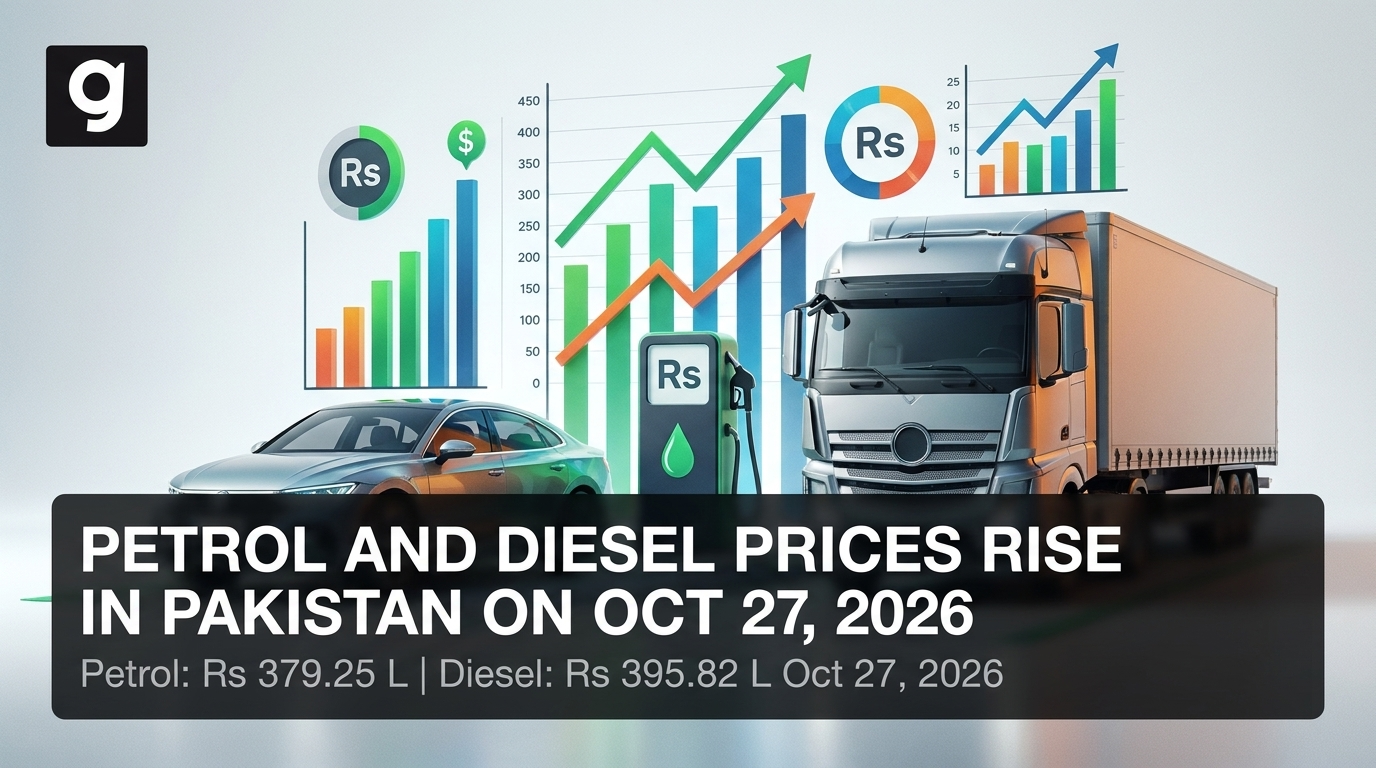
Effective October 27, 2026, Pakistan’s Petroleum Division announced a fresh revision of fuel rates. The petrol price in Pakistan rose by Rs 1.54 per litre to Rs 379.25, while the high‑speed diesel price climbed by Rs 2.16 to Rs 395.82. This marks the latest adjustment in a series of changes driven by international Platts rates, premiums and related costs. Understanding the new petrol price October 27 2026 is essential for motorists, transport operators, businesses and everyday consumers.
Overview of the Recent Fuel Price Revision
The revision reflects a modest but noticeable increase in both petrol price today and diesel price in Pakistan. Petrol moved from Rs 377.71 to Rs 379.25 per litre, while diesel rose from Rs 393.66 to Rs 395.82. Notably, diesel has risen for the third consecutive revision, adding Rs 5.71 per litre since the October 22 update. These changes are part of the broader trend captured under Pakistan fuel prices October 2026, where global market volatility continues to shape local pricing.
Petrol price increase details
The petrol price increase of Rs 1.54 per litre may appear modest, but it translates into higher operating costs for private car owners and fleet managers alike. The adjustment aligns with the latest international oil benchmarks, which have seen a gradual upward shift due to supply constraints and geopolitical factors.
High‑speed diesel price increase details
The diesel price increase of Rs 2.16 per litre pushes the high‑speed diesel to Rs 395.82. Diesel, being the primary fuel for commercial transport, feels the impact more acutely. The cumulative rise of Rs 5.71 since October 22 underscores the pressure on logistics and freight sectors.
Impact on Different Stakeholders
Motorists
- Higher daily commuting costs as each kilometre now costs slightly more.
- Potential shift towards fuel‑efficient vehicles or increased use of public transport.
- Greater sensitivity to price fluctuations, influencing purchase decisions for new cars.
Transport Operators
- Increased fuel expenses for buses, taxis and ride‑hailing services, eroding profit margins.
- Need to adjust fare structures or seek subsidies to remain competitive.
- Greater incentive to adopt alternative fuels or improve vehicle maintenance for better mileage.
Businesses and Logistics
- Rising freight costs that may be passed on to consumers through higher product prices.
- Pressure on supply‑chain budgeting, especially for sectors reliant on road transport.
- Potential acceleration of investment in rail or multimodal transport to mitigate fuel cost exposure.
Consumers and Household Budgets
- Higher cost of goods as transportation expenses are reflected in retail prices.
- Reduced disposable income, particularly for low‑income families who spend a larger share on fuel.
- Increased attention to energy‑saving practices at home and in daily travel.
Broader Economic Implications
The upward trend in Pakistan petroleum prices can influence inflation, as fuel is a key component of the consumer price index. Higher transport costs often lead to price adjustments across food, clothing and essential services. Policymakers may need to balance revenue generation with the risk of stoking inflationary pressures, especially in a climate where global oil prices remain volatile.
What to Expect Going Forward
Analysts suggest that as long as international crude prices stay elevated, further revisions to the latest petrol prices and diesel rates are possible. Stakeholders are advised to monitor announcements from the Petroleum Division and consider hedging strategies, fuel‑efficiency upgrades, or alternative energy sources to cushion future impacts.
Conclusion
The recent rise to Rs 379.25 for petrol and Rs 395.82 for diesel marks another step in the evolving landscape of Pakistan fuel prices October 2026. While the increase may seem modest on paper, its ripple effects touch motorists, transport operators, businesses and households alike. Staying informed about the petrol price in Pakistan and planning accordingly can help mitigate the financial strain of higher fuel costs.